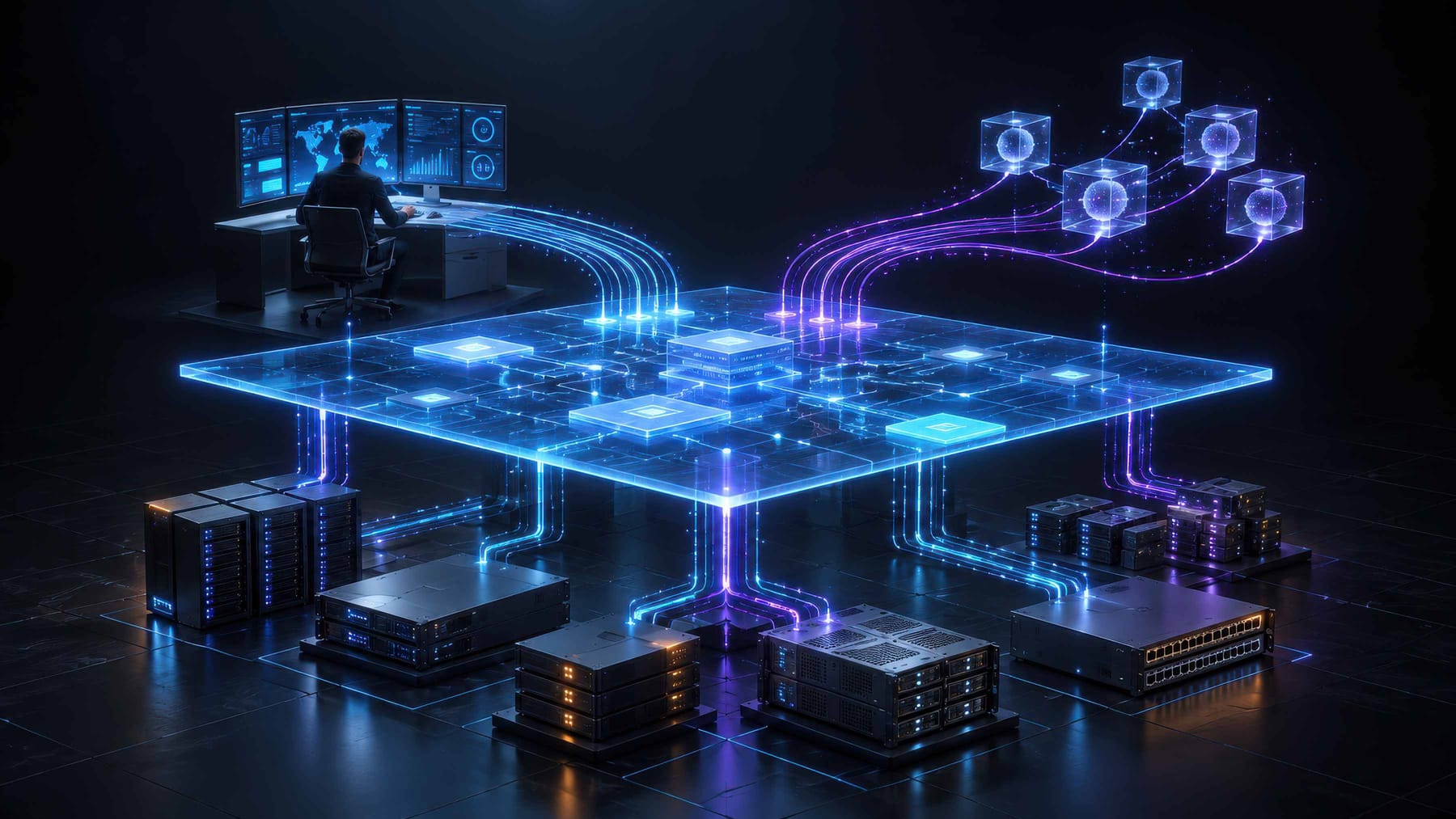
Gartner's Reference Architecture Brief lays out what a modern automation stack needs to look like now that AI agents, not just people, can act on infrastructure directly. It breaks the stack into ten components - deployment targets, sources of truth, orchestration, image management, provisioning, operations, security, observability, access, and reusability - and treats each as pluggable: adopt what your environment needs, skip what it doesn't.
The report is direct about provisioning specifically: VMs and containers inherited mature, vendor-native APIs from day one. Bare metal never did. It still runs on PXE boot and vendor-specific management interfaces, which is why Gartner treats it as its own category rather than something bolted onto tools built for VMs or containers.
For teams building this out, the brief's advice is to stop treating bare metal as an afterthought to virtualization. Design for it as its own layer, with the same self-service and declarative approach applied to VMs and containers.
MetalSoft is named in that category: one platform for bare metal, network, and storage, built to bring physical infrastructure into the same self-service model teams already expect from the cloud.
Talk to us about your environment.
The full brief, Reference Architecture Brief: Infrastructure Automation and Orchestration for Humans and Agents, is available to Gartner subscribers.